Structural Drying in Rockwell, NC
Air movers, LGR dehumidifiers, and daily moisture logs that dry Rockwell homes to a verified standard, not to a guess, after the standing water is gone.
☎ Call (980) 998-379724/7 dispatch · day or night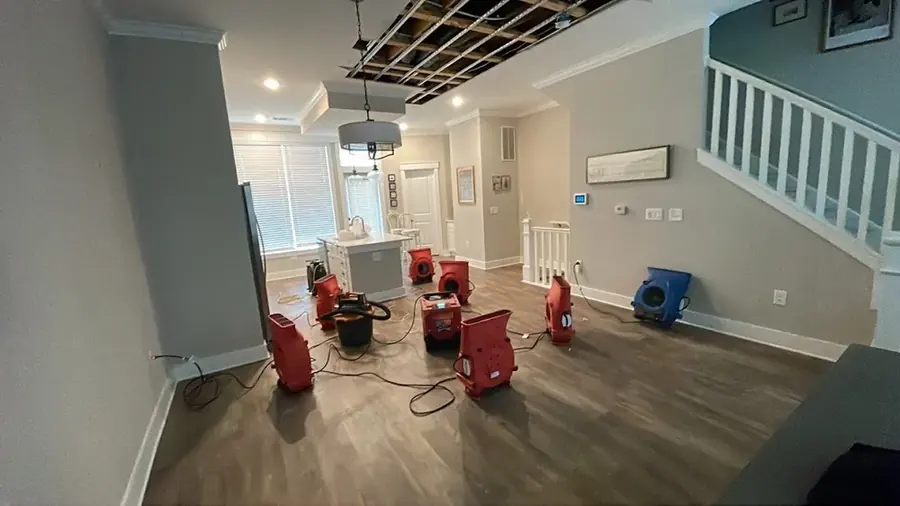
Once the standing water is gone, the job is only half done. The water that soaked into your drywall, subfloor, and framing is still there, and in Rowan County's humid air and slow draining red clay it does not leave on its own. Structural drying pulls that trapped moisture back out to a verified standard. Whitewater Restoration dries Rockwell homes by the numbers, not by a look and a guess.
How structural drying and dehumidification is handled in Rowan County
Call & dispatch
A dispatcher answers 24/7 and the nearest Rowan County crew heads out with pumps, air movers, and moisture meters.
On-site assessment
The crew finds the source and the full reach of the water, including what soaked into subfloor, crawl space, and wall cavities.
Extract & dry
The extraction crew pulls the standing water, then runs air movers and dehumidifiers to a verified dry standard, not just the surface.
Verify & document
Moisture readings are logged until the structure is dry, then the loss is documented with the photos and readings an adjuster needs.
Why drying is its own stage
Extraction removes the bulk water you can see. Drying removes the moisture you cannot, the water already wicked into building materials. Skip it, or rush it, and the damage shows up weeks later as cupped hardwood, swollen trim, and mold behind the wall.
After a good water extraction, moisture is still holding where air cannot reach:
- Drywall, which wicks water upward well above the visible water line
- Subfloor and floor joists that stay damp long after the surface feels dry
- Hardwood and the crawl space below it, where humid air keeps everything wet
On a humid Piedmont day the outdoor air is often wetter than the air inside, so opening the windows slows the dry out.
The drying equipment
Drying is a balance of moving air, pulling water from it, and holding temperature. The crews bring the full set:
- Air movers that sweep the wet surfaces and lift moisture into the air
- LGR dehumidifiers that pull that moisture out of the air and drain it away
- Desiccant units for dense materials and tight crawl spaces that need deeper drying
- Moisture meters and thermal imaging to find every wet pocket and track the numbers
- 01Map the moisture. The technicians read affected and unaffected materials to set a real dry target.
- 02Set the system. Air movers and dehumidifiers are placed by the numbers, not scattered around.
- 03Contain the zone. The restoration crews seal the wet area so the equipment dries the loss, not the whole house.
- 04Monitor daily. Rowan County crews return each day, log the readings, and adjust as the materials give up water.
- 05Verify and hand back. When the meters hit the dry target, the local crews pull the gear and document it.
Water pulled out but the room still feels damp? Call and a Rowan County crew will set a proper drying system today and monitor it to a verified dry.
☎ Call (980) 998-3797Moisture mapping and daily monitoring
The difference between a real dry out and a rented fan is the record. The crews set a target moisture level from the dry parts of your home, take readings every day, and log them. A floor is done when the meter says so, not when it feels dry underfoot.
For a rough sense of the timeline, our drying time estimator gives a plain range for drywall, hardwood, concrete, and a wet crawl.
Red clay and lake humidity slow the dry out here
Rowan's red clay drains slowly and holds moisture around a foundation, and homes near High Rock Lake sit in humid air much of the year. Both keep materials wetter, longer, which is why the technicians monitor to a number every day.
Drying older Rowan homes
Many homes in Rockwell, Salisbury, and the old mill towns have plaster, solid hardwood, and pier and beam crawl spaces, each drying differently than modern drywall. Plaster holds water deep, hardwood cups if dried too fast, and a damp crawl feeds moisture into the floor above.
When water has sat long enough that mold is a real risk, the restoration crews handle mold remediation alongside the drying, and a chronically wet crawl often needs its own crawl space water plan. The EPA mold and moisture pages explain why controlling moisture matters, and the National Weather Service in Greenville Spartanburg tracks the humidity that shapes the drying times.
Why Rowan County calls Whitewater Restoration
Rapid local response
A dispatcher answers 24/7 and the nearest crew heads out the moment you call, day or night, across Rockwell and Rowan County.
IICRC S500 drying standard
Trained technicians dry to a verified standard with air movers, dehumidifiers, and moisture meters, not a mop and a fan.
Claim-ready documentation
The loss is documented with photos and daily moisture readings, the paperwork an adjuster needs to move a claim.
Local water experts
Red-clay drainage, crawl-space humidity, hard-freeze snaps, and lake-home exposure, so the local pros know how water moves here.
From Rockwell across all of Rowan County
Rockwell water damage pros respond across Rowan County, day or night.
Rockwell water damage pros cover all of Rowan County, day or night, from the US-52 corridor to the High Rock Lake shoreline.
Coverage runs across Rockwell, Salisbury, Granite Quarry, Faith, Gold Hill, China Grove, Landis, Spencer, and the High Rock Lake area.
See every neighborhood and ZIP covered ›Related restoration services
Common questions, answered
How long does structural drying take?
Most homes dry in three to five days, but our humid air, red clay, and older materials can push it longer. The crews monitor moisture daily and pull the equipment when the readings hit the dry target, not on a fixed schedule.
Why can't I just use box fans and open the windows?
Box fans move air but do not remove water from it, and on a humid Piedmont day open windows often let in air wetter than the air inside. Proper drying needs dehumidifiers pulling the moisture out and a contained zone to work in.
What is an LGR dehumidifier?
LGR stands for low grain refrigerant, a dehumidifier that pulls far more moisture out of the air than a home unit. It is what dries the structure to a verified standard in a reasonable number of days.
How do you know when my home is actually dry?
The crews set a dry target from the unaffected parts of your home and take meter readings every day. When the wet materials match that target, the structure is dry by the numbers, and the technicians document the final readings.
Will you check for mold while drying?
Yes. Fast, verified drying is the best way to stop mold before it starts, and if the crews find growth already underway the technicians contain it and bring in our remediation crew alongside the dry out.
Does the equipment have to run day and night?
Yes, the air movers and dehumidifiers run continuously to keep the dry out on track. They use some electricity and make noise, but stopping them each night can add days to the job and let mold take hold.
Does insurance cover the drying stage?
Structural drying is standard mitigation on a covered water loss, so it is generally included. The crews log the equipment, the readings, and the days on site so your carrier has a clear record.
Do you dry hardwood floors or pull them?
The crews save hardwood when the technicians can. Fast drying with the right equipment often keeps a floor from cupping or buckling, but a floor that has swelled badly may still need work. The restoration crews read the moisture and tell you honestly what the wood is doing.
Rowan County's water damage crew is standing by
Water sitting means damage spreading. Call Whitewater Restoration and a local crew heads out across Rowan County, day or night.
(980) 998-3797Call now, a Rowan County crew picks up day or night